By Ross Janezich, Master Electrician & Co-Owner
The short answer
Recessed lighting in a Magnolia home should be laid out in the room, use IC-rated housings where insulation lives, and sit on an LED-compatible dimmer. Janezich Electric marks cans with you standing there — not a random grid of six-inch holes.
“Can you add six cans?” is how a Magnolia kitchen ends up with a random grid and six color temperatures. Recessed lighting is a layout job first. Janezich Electric marks can lights with you standing in the room.
Tomball and The Woodlands kitchens get the same rule: even spacing, matching trims, a dimmer that works with LEDs.
IC-rated where insulation lives
Attic insulation and a non-IC can is a heat problem. We use the housing the ceiling needs, then match trims so the room looks finished.
Dimmers that work with LEDs
A leftover incandescent dimmer on new LED cans is why people think the bulbs are bad. We spec an LED-compatible dimmer and test it.
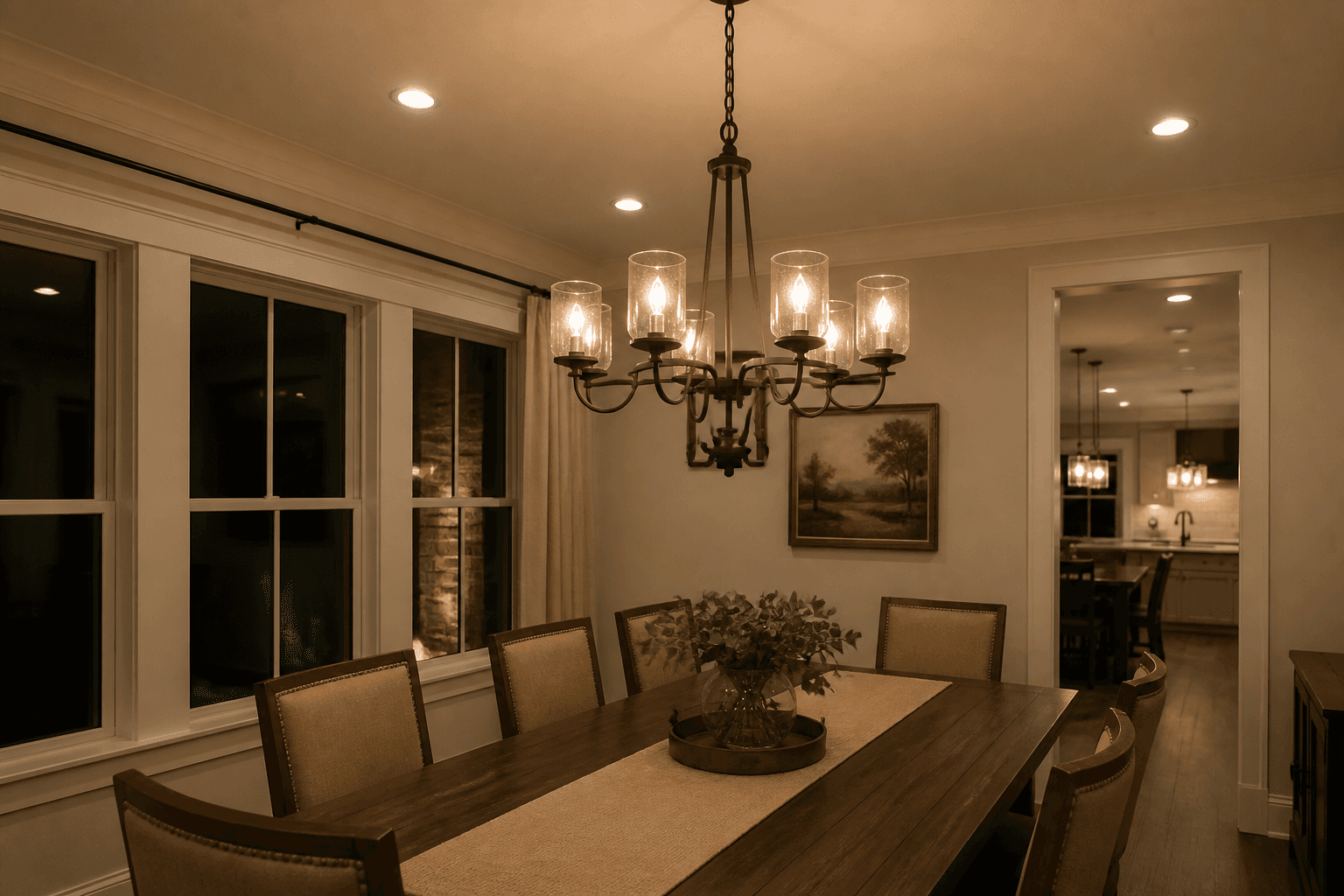
Chandeliers still need a real box
Dining fixtures are often the same night. A heavy chandelier on a plastic box is the same failure we see with ceiling fans.
Finished ceilings
Most Magnolia and Tomball homes can take cans with attic access. We confirm joist direction before anyone cuts a hole you will stare at for ten years.
How to start
Tell us the rooms and whether the attic is accessible. Call 346-236-3512 or send the quote form.
Common questions
Can you add recessed lights in a finished Magnolia ceiling?
Yes in most homes. We confirm attic access and joist direction first.
Why do new can lights flicker?
Usually the dimmer, not the lamp. We install an LED-rated dimmer and test it.
Do you install chandeliers with the cans?
Yes, on a box that can hold the fixture.
What color temperature should kitchen cans be?
We usually match 3000K warm white unless you want a brighter kitchen. The room should be one Kelvin.